
For a meat or poultry business, product quality is money. A pallet that thaws with excess liquid, loses colour or turns mushy is a pallet that customers send back. In many cases the root cause is not the raw material but the speed of freezing. Blast freezing exists to solve exactly that problem.
What is blast freezing?
Blast freezing, also called shock freezing, uses very cold air moving at high speed to bring the core temperature of a product below freezing in a short time. Compared with a standard freezer, which pulls heat out slowly, a blast freezer forces rapid heat transfer. The faster the product passes through the freezing zone, the smaller the ice crystals that form inside the muscle tissue.
Why crystal size decides quality
Meat is mostly water held inside cells. In slow freezing, water migrates out of the cells and forms large crystals between them. These crystals puncture cell walls. When the product thaws, that moisture escapes as drip loss, leaving drier, tougher meat. Rapid freezing keeps crystals small and evenly distributed, so cell structure stays closer to its original state and the thawed product holds more of its juices, texture and colour.
Preparing meat and poultry for the blast freezer
Keep the product cold before freezing
Warm product forces the freezer to work harder and slows down the process. Where possible, move cut product quickly from processing to freezing and avoid long waits at ambient temperature.
Standardise portion size
Thick, irregular pieces take much longer to freeze at the core than thin, uniform portions. Consistent sizing gives predictable freezing times and fewer surprises.
Pick the right packaging
Food-grade bags or vacuum packaging reduce air contact and protect against freezer burn. Make sure the packaging does not trap heat or create thick air layers around the product.
Label everything
Product name, batch, production date and weight should be visible on every carton or tray. Good labelling supports traceability and first-in, first-out rotation later.
The freezing process, step by step
- Loading: Place trays or cartons in a single layer where possible, leaving gaps for airflow.
- Freezing cycle: Product is exposed to fast, very cold air until the core reaches the target temperature of -18°C or below.
- Core check: Use a probe to confirm the centre of the product, not just the surface, has reached the target.
- Transfer: Move frozen product directly into a deep-freeze room, keeping the time outside controlled conditions as short as possible.
Cycle length depends on the product thickness, packaging, loading pattern and starting temperature, so a probe reading is always more reliable than a fixed timer.
Common mistakes that cost money
- Stacking cartons tightly so air cannot circulate
- Overloading the blast room in a single batch
- Skipping the blast stage and placing warm product straight into storage rooms
- Re-freezing product that has already thawed
- Leaving pallets unlabelled or unscheduled
From blast freezer to storage without breaking the chain
Blast freezing is only half the job. Once product is frozen, it needs a stable -18°C environment with minimal temperature swings. Fluctuations cause partial thawing and re-freezing at the surface, which slowly degrades quality. For a closer look at long-term storage conditions, read our guide to -18°C storage.
Why many producers outsource blast freezing
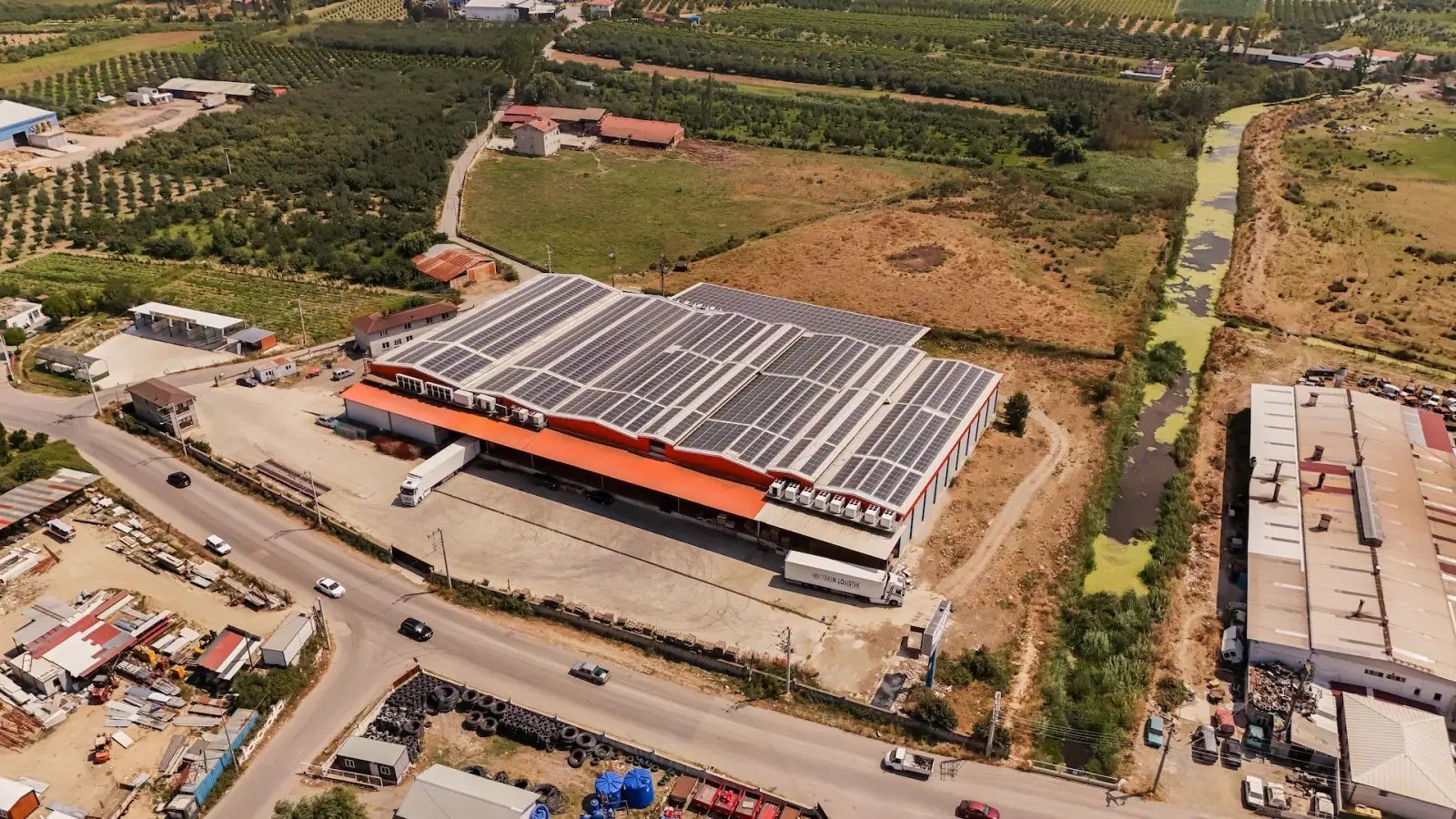
A blast freezing line is a major investment in compressors, evaporators, power capacity and maintenance. If your production is seasonal, growing or irregular, paying for capacity as you need it is often more efficient than owning idle equipment. At Yıldırım Cold Storage in Geyve, Sakarya, we operate 4 blast rooms with about 40 tons per day of capacity, backed by 18 storage rooms, a generator and solar power. Frozen product moves within the same site instead of traveling to a second facility.
Plan your next production run
Tell us your product type, portion size and weekly volume, and we will suggest a freezing and storage plan that fits. See our services, take a look at the facility, or request a free quote through the contact page. Prefer to talk? Call +90 532 376 12 56.